Faroe Islands Territory
The Faroe Islands, Føroyar in Faroese, are a group of 18 islands in the North Atlantic, roughly halfway between Scotland and Iceland. Since 1948 they have been a self-governing community within the Kingdom of Denmark, with their own parliament, their own language and traditions, such as the chain dance, that have faded elsewhere in Europe.
Top local food in Faroe Islands
Top local drinks in Faroe Islands
Coffee • snaps • Faroese beer
Top local desserts in Faroe Islands
Key facts
- Status
- Self-governing community within the Kingdom of Denmark since 1948
- Islands
- 18
- Land area
- 1,399 km²
- Capital
- Tórshavn
- Languages
- Faroese; Danish has equal status in official affairs
- Parliament
- Løgting, 33 members
- National day
- Ólavsøka, 29 July
Eighteen islands between Scotland and Iceland
Visit Faroe Islands describes the archipelago as 18 volcanic islands separated by narrow sounds and fjords, with a land area of 1,399 square kilometres. About 56,000 people live there, and roughly two in five of them live in the capital, Tórshavn.
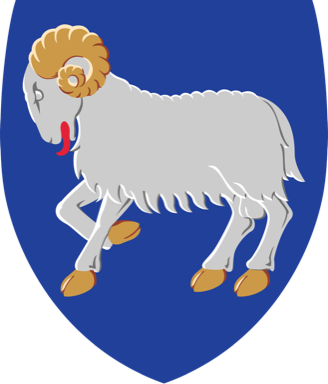
Sheep are part of the landscape and, perhaps, of the name. Wikipedia notes that the most widely held reading of Føroyar is “sheep islands”, a theory first recorded in the medieval Færeyinga Saga, and Denmark’s foreign ministry counts almost 70,000 sheep on the islands, more than the human population.
Self-government within the Danish Realm
The Home Rule Act of 23 March 1948 made the Faroe Islands a self-governing community within the Kingdom of Denmark, according to the Danish Prime Minister’s Office. A further law, the Takeover Act, came into force on 29 July 2005 and allows the Faroese authorities to take over almost every field of government. Fields such as the constitution, nationality, foreign, defence and security policy, and monetary policy stay with the Danish state, and justice and policing have not been taken over.
The Faroese parliament, the Løgting, has 33 members elected for four years. According to the Faroese government, the Løgting’s origins can be traced back more than a thousand years, and Visit Faroe Islands suggests it may be the oldest parliament in the world. The islands also elect two members of the Danish parliament in Copenhagen. Although Denmark belongs to the European Union, the Faroe Islands chose to stay outside it, and their economy rests mainly on fisheries and aquaculture.
From Irish hermits to the Danish crown
Irish monks are credited with the first settlement, and the Irish scholar Dicuil wrote of hermits from Ireland living on islands in the north. Norse farmers arrived in the 9th century, and their Old Norse speech developed into modern Faroese.
The islands came under Norwegian rule in the Middle Ages and later belonged to the joint kingdom of Denmark and Norway; when that union was broken up, the Treaty of Kiel of 1814 formally ceded them to Denmark. Faroese, long kept out of writing, is now the main language of public life, while Danish keeps equal status in official affairs.
Ballads, the chain dance and Ólavsøka
The Faroese chain dance, føroyskur dansur, grew from the ring dances of medieval Europe. It faded elsewhere, probably after the church condemned it as pagan, but survived on the islands. No instruments are used: the dancers link hands in a ring and sing kvæði, long narrative ballads, while a leader starts each verse. The ballads tell of kings and heroes, and the government’s culture pages note that some run to several hundred verses. The National Museum’s inventory of living culture says that, together with the language, the dance has been central to Faroese identity, and dance associations meet through the season from October to Shrovetide.
The national day, Ólavsøka, falls on 29 July and is celebrated over 28 and 29 July in Tórshavn. It honours Saint Olaf, the Norwegian king who died at Stiklestad in 1030, and marks the opening of the Løgting after the summer. The national rowing finals are held in Tórshavn during the festival, which closes with midnight singing in the town square, followed by the chain dance.
Food from wind and sea
Faroese cooking has long centred on fish and lamb, and on using the weather to keep them. Ræst is the islands’ salt-free way of preserving meat and fish, left to age in a hjallur, a drying shed whose walls let the sea wind through. One result is skerpikjøt, mutton hung in the wind for five to nine months, which Denmark’s foreign ministry describes as often served thinly sliced on open rye bread.
In Emblem World, the Faroe Islands have their own territory pavilion within Denmark, where people discover and rate local food, drinks, desserts and music.
Sources
- Visit Faroe Islands: Quick facts
- Visit Faroe Islands: Government & politics
- Government of the Faroe Islands: Føroyar, the Faroe Islands
- Faroe Islands (Føroya landsstýri): The Faroese Parliament
- Faroe Islands (Føroya landsstýri): National day
- Faroe Islands (Føroya landsstýri): The Faroese chain dance
- Tjóðsavnið (National Museum of the Faroe Islands): The Faroese chain dance
- Danish Prime Minister’s Office: The Unity of the Realm, Faroe Islands
- Ministry of Foreign Affairs of Denmark: Faroe Islands, history and culture
- Ministry of Foreign Affairs of Denmark: Faroe Islands, gastronomy
- Visit Faroe Islands: The food culture of the Faroe Islands (Catherine Martel)
- Wikipedia: Faroe Islands
- Wikipedia: Faroese chain dance
- Wikipedia: Ólavsøka
- Visit Faroe Islands: Music
Checked by Emblem editorial on 9 October 2026.